
Have you ever destroyed a favorite shirt in the washing machine?
Or noticed a jacket losing shape after just one wash?
Choosing between dry cleaning vs home washing can be confusing.
Most people guess instead of deciding correctly.
Different clothes need different cleaning methods.
Deploying the wrong one shortens garment life.
Home washing feels convenient and affordable.
Dry cleaning feels professional and more secure.
But what option works best for which clothes?
And when does professional garment care truly matter?
In this blog, you will learn:
-
- The true difference between laundry vs dry clean
-
- When home washing is safe
-
- When dry cleaning is absolutely necessary
-
- How to safeguard expensive fabrics
This guide simplifies clothes cleaning methods.
No complicated science.
Just practical, everyday options.

What Is Home Washing?
Home washing uses water, detergent, and distress.
It erases surface dirt and sweat effectively.
Best suited for:
-
- Cotton t-shirts
-
- Casual wear
-
- Undergarments
-
- Everyday linens
Home washing works well for strong fabrics.
Delicate garments often suffer damage.
What Is Dry Cleaning?
Dry cleaning utilises chemical solvents instead of water.
It cleans without soaking fabrics.
Professional dry cleaning protects:
-
- Fabric structure
-
- Color intensity
-
- Garment shape
This method suits clothes that water can damage.
Why Choosing the Right Method Matters
Wrong cleaning causes irreversible impairments.
Shrinkage, fading, and distortion happen fast.
Professional garment care extends clothing lifespan.
It also preserves easement and appearance.
According to textile studies, over 75% of garment damage comes from incorrect washing.
When Home Washing Is the Correct Choice
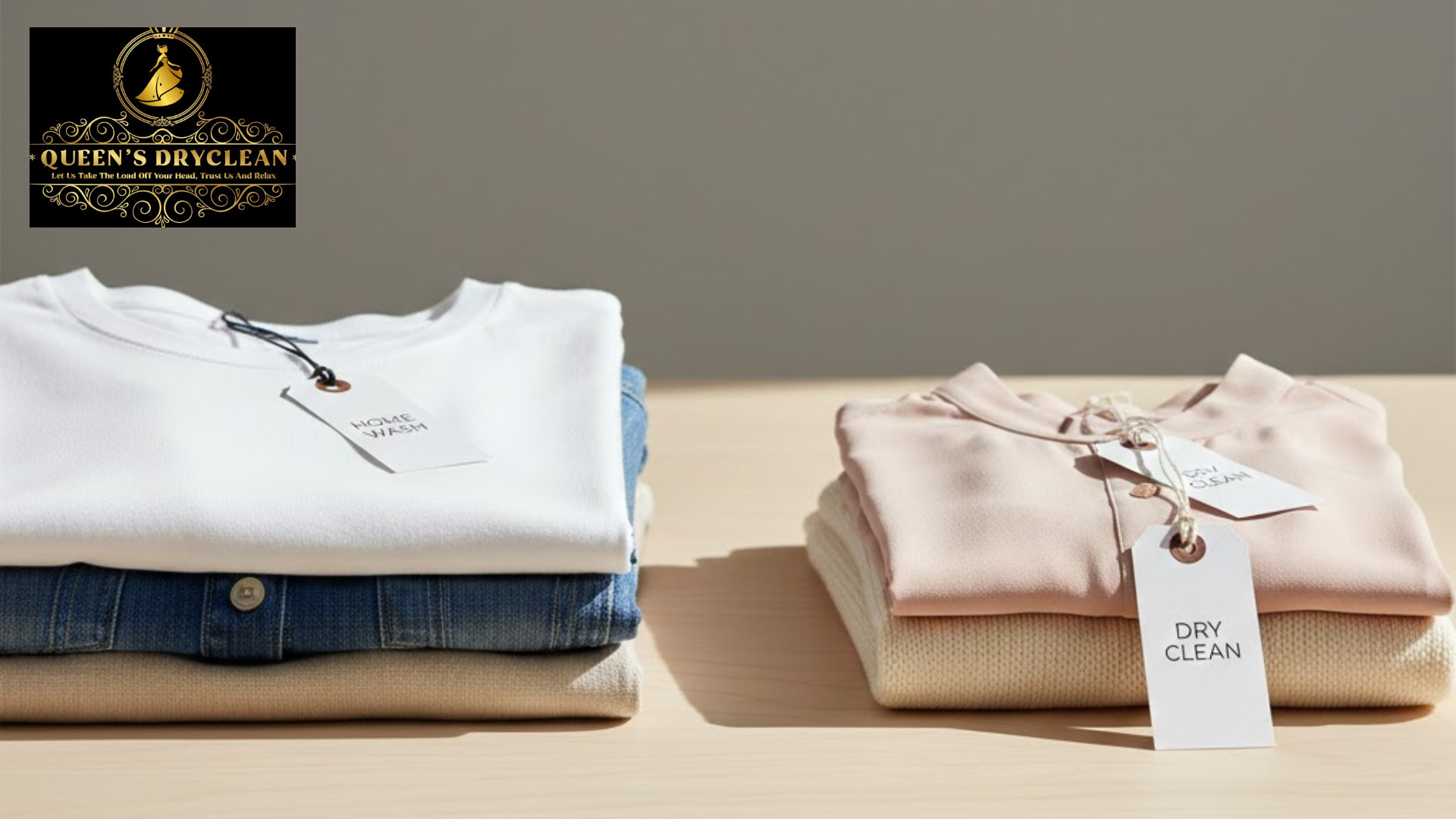
Select home washing when clothes are:
-
- Machine-wash labeled
-
- Made from cotton or blends
-
- Low-cost or everyday wear
-
- Free from heavy stains
Follow these tips:
-
- Utilise cold water
-
- Turn garments inside out
-
- Avoid overloading machines
Common habits reduce fabric stress.
When Dry Cleaning Is the Better Option
Opt for dry cleaning for:
-
- Suits and blazers
-
- Silk sarees and dresses
-
- Wool coats and jackets
-
- Designer or luxury garments
Dry cleaning vs home washing affects most here.
Water causes shrinkage and color bleeding.
Dry cleaning prevents that damage.
Laundry vs Dry Clean: Quick Comparison
Home Washing
-
- Uses water and detergent
-
- Suitable for daily wear
-
- Lower cost
-
- Higher wear over time
Dry Cleaning
-
- Uses fabric-safe solvents
-
- Ideal for delicate clothes
-
- Maintains structure
-
- Longer garment lifespan
Both have merit when used correctly.
Common Mistakes People Make
Many people rely on habit, not labels.
-
- Washing “dry clean only” clothes at home
-
- Employing hot water for delicate fabrics
-
- Overwashing garments unnecessarily
-
- Ignoring professional care advice
One error often means permanent damage.
Real Example: Suit Care Gone Wrong
A client washed a wool jacket at home.
The fabric shrank unevenly.
Professional reshaping was needed.
Replacement would have cost much more.
Correct cleaning prevents such depletion.
How Professional Dry Cleaning Helps
Professional services offer:
-
- Fabric-specific cleaning
-
- Expert stain removal
-
- Controlled drying
-
- Proper pressing
At Queens Drycleaning, each garment receives solitary attention.
Free pickup and delivery make it uncomplicated.
A 48-hour turnaround guarantees speed
Conclusion
Dry cleaning vs home washing is not in regards to preference.
It is about making informed choices.
Home washing works for everyday clothes.
Dry cleaning protects valuable and intricate garments.
Grasping clothes cleaning methods saves money.
It also keeps your wardrobe looking fresh and new.
When in doubt, professional garment care is secure.
It averts damage and extends lifespan.
Queens Dry Clean makes this easy.
Enjoy premium dry cleaning with free pickup and delivery.
Get your clothes back in just 48 hours.