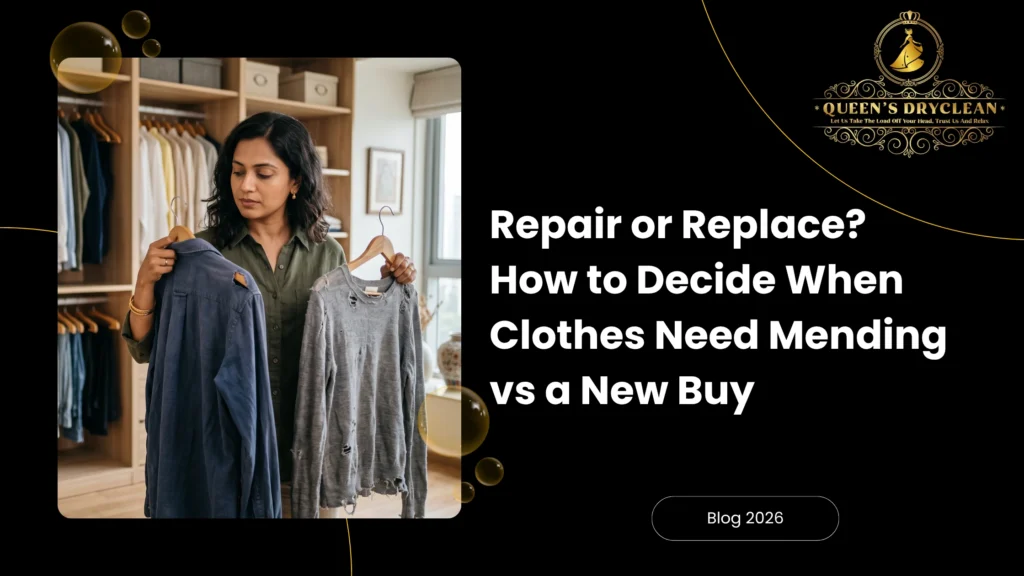
You uncover a small hole in your favourite sweater.
Do you repair it or start shopping for a replacement?
It sounds like a simple decision, but replacing clothes every time something goes wrong can become expensive.
Many common problems are surprisingly repairable.
Loose seams, small holes, damaged hems, worn areas, and broken zips do not always mean a garment reaches its end.
A professional clothing repair service can often give clothes a useful second life.
Repair also makes sense beyond saving money.
Keeping clothes in use for longer lessens the need to replace them as frequently.
WRAP research finds that repairing clothing can extend its lifespan significantly.
However, repair is not always the right answer.
Severely damaged fabric, poor fit, or expensive restoration can sometimes make replacement more practical.
So, how do you decide?
This blog explains:
- When clothes are worth repairing
- When replacement makes more sense
- Which types of damage can be mended
- How professional darning works
- What to consider before spending money on either option
The smartest choice starts with assessing the garment, not immediately throwing it away.
Why Repairing Clothes Deserves a Second Look
Clothing repairs once formed a normal part of wardrobe care.
Today, economical fashion makes replacement feel easier.
But easy does not always mean low-priced.
Repairing makes particular sense for:
- Expensive garments
- Favourite clothes
- Good-quality fabrics
- Perfectly fitting pieces
- Sentimental clothing
- Minor damage
A small repair can sometimes add years of wear.
Research from WRAP finds that repairing clothing can extend its lifespan from four years to around 5.3 years.
That represents an increase of approximately 32%.
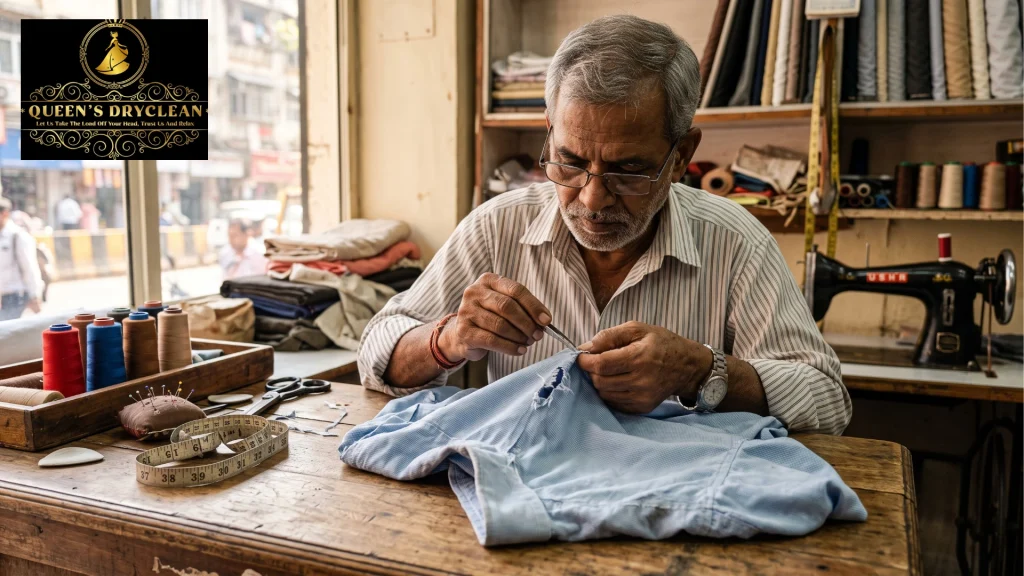
Repair or Replace? Start With These 5 Questions
Before making a decision, ask yourself these questions.
1. How Serious Is the Damage?
A mislead button is easy to fix.
A large area of severely weakened fabric is different.
Look at whether the damage is:
- Localised
- Spreading
- Structural
- Cosmetic
- Repairable without changing the garment
Minor, contained damage usually makes a stronger case for repair.
2. What Is the Garment Worth?
Price matters, but value goes beyond the original bill.
Review a well-tailored blazer that fits perfectly.
Finding an equally good replacement may cost considerably more than repairing a small tear.
The same applies to:
- Premium knitwear
- Suits
- Dresses
- Coats
- Traditional clothing
- Designer pieces
3. How Much Do You Actually Wear It?
Repairing clothes you never wear makes little sense.
Ask yourself:
If this garment is repaired today, do I genuinely wear it again?
If the answer is yes, repair becomes easier to justify.
4. Does It Still Fit?
A ideal repair cannot fix a garment you no longer enjoy wearing.
However, some fit problems can also be altered.
Professional garment mending services may work alongside alterations to make an existing garment wearable again.
5. How Does Repair Cost Compare With Replacement?
Compare like for like.
Do not compare repairing a premium wool sweater with buying the cheapest new sweater available.
Ask what replacing it with similar and comparable quality actually costs.
That gives you a fairer comparison.
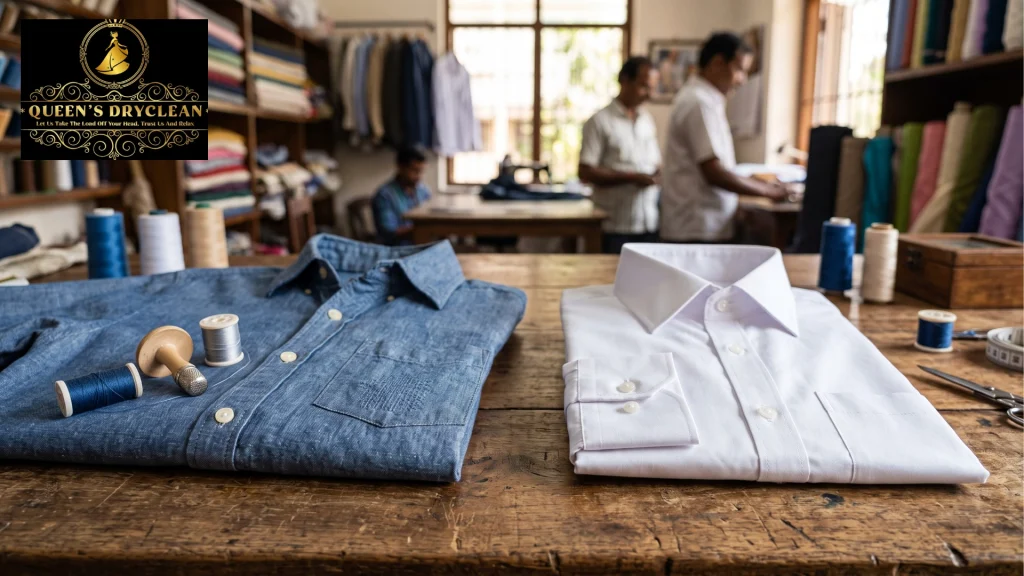
7 Clothing Problems Usually Worth Repairing
1. Small Holes
Small holes in knitwear, sweaters, and other fabrics may respond well to darning.
Repair them early.
A tiny hole can become much larger with continued wear.
2. Loose Seams
A separating seam does not usually mean the entire garment fails.
Professional stitching can often reinforce the affected place.
3. Damaged Hems
Trouser, skirt, and dress hems commonly loosen with wear.
These are often straightforward repairs.
4. Broken Zips
A impaired zip can make a perfectly good garment unusable.
Replacing or repairing the zip can restore its function.
5. Worn Fabric
Areas around elbows, cuffs, pockets, and other high-friction points can become thin.
Professional reinforcement may prevent further deterioration.
6. Minor Tears
A clean, localised tear can often be repaired.
The final appearance depends on fabric, location, colour, and damage.
7. Fit Problems
Sometimes the garment is perfectly good but no longer fits accurately.
Alterations may make more sense than replacement.
What Is Darning?
Darning is a traditional repair technique used to reinforce damaged or weakened fabric.
Thread is worked into the affected area to rebuild its structure.
Professional darning centres on both strength and appearance.
It can be particularly useful for:
- Knitwear
- Sweaters
- Small holes
- Cuffs
- Worn areas
- Delicate garments
If you search for darning services near me, look for someone who assesses the fabric before promising a result.
Different weaves, colours, and materials require different techniques.
When Is Professional Mending Better Than DIY?
Sewing on a loose button at home is one thing.
Repairing fine wool or delicate silk is another.
Professional help makes absolute sense when:
- The garment is expensive
- Damage sits in a visible area
- Fabric is delicate
- Matching thread is difficult
- Structural reinforcement is required
- You want the repair to remain discreet
This is where professional garment mending services add value.
When Should You Replace Clothes Instead?
Not everything deserves another repair.
Replacement may make more sense when:
The Fabric Is Weak Everywhere
Repairing one hole achieves little if surrounding fabric continues tearing.
Repair Costs Exceed the Garment’s Value
Some complicated restoration work becomes high-priced.
Compare the cost with an equivalent replacement.
The Garment No Longer Fits Your Needs
If you never wear it, repairing it may simply return it to the wardrobe.
Damage Is Too Extensive
Large burns, widespread deterioration, severe discoloration, or extensive fabric loss may make restoration unrealistic.
A good clothing repair service should tell you when repair is not practical.
The Sustainability Argument for Repair
Repair does more than save a favourite shirt.
It can also lessen unnecessary consumption.
WRAP identifies extending clothing life as one of the most effective ways to reduce clothing’s environmental impact.
Its research finds that extending clothing life by nine months can reduce carbon, water, and waste footprints by up to 20%.
More recent WRAP research also finds that for every five garments repaired, around four repairs displace a new purchase.
Repair therefore creates a simple principle:
Use what you already own for longer.
Example: The Favourite Wool Sweater
Envision you own a high-quality wool sweater.
It fits perfectly and remains in excellent condition.
Then you discover two small holes near the sleeve.
Option one is replacement.
You search online and discover an equivalent wool sweater costs considerably more than expected.
Option two is professional darning.
The damaged areas are assessed and carefully reinforced.
The sweater returns to your wardrobe instead of being discarded.
In this situation, repair makes practical and financial sense.
How to Choose Clothing Mending Near Me
Searching clothing mending near me gives you plenty of options.
Do not opt for based on price alone.
Look for:
- Experience with different fabrics
- Fabric-matched threads
- Clear repair assessment
- Precision stitching
- Clean finishing
- Honest expectations
- Convenient pickup and delivery
Ask what the finished repair is likely to look like before approving the work.
How Queens Drycleaning Helps Restore Clothes
Queens Drycleaning proffers professional clothing repair and restoration services in Mumbai.
Its clothing repair service covers problems including:
- Holes and tears
- Worn fabric
- Seam repairs
- Zip replacement
- Patchwork
- Structural stitching
- Alterations
- Darning
Each garment is first inspected for its fabric, weave, colour, and extent of damage.
The appropriate repair method is then selected.
Queens also offers doorstep pickup and delivery, making repairs easier without repeated trips to a tailor.
For customers searching clothing mending near me or darning services near me, this amalgamates professional repair with convenient garment care.
Conclusion
A hole, tear, broken zip, or worn seam does not automatically mean you need new clothes.
Start by considering the garment’s quality, condition, replacement cost, fit, and how often you wear it.
Minor damage often makes a strong case for repair.
Professional garment mending services and darning can restore function, reinforce weak areas, and elongate clothing life.
Replacement still makes sense when damage becomes extensive or repair is no longer economical.
But before throwing a favourite piece away, ask one question:
Can this garment have another life?
Queens Drycleaning provides professional clothing repair service, clothing mending (near me), and darning in Mumbai with convenient doorstep pickup and delivery.
Give your favourite clothes a possibility to stay in your wardrobe longer.