Ever ironed a shirt and still saw wrinkles?
Or noticed shiny marks after ironing trousers?
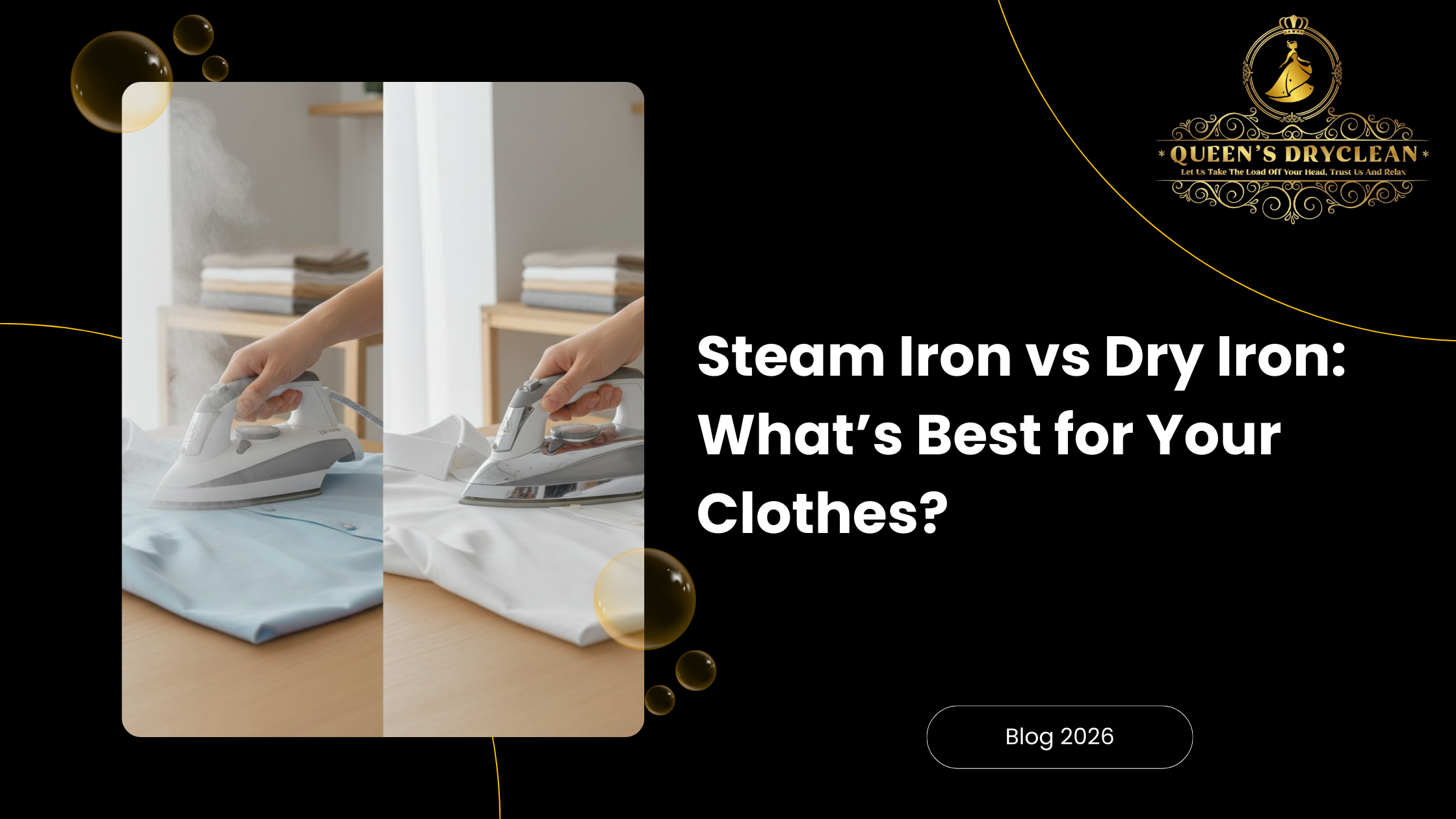
Opting between steam iron vs dry iron confuses many people.
Both tools eliminate wrinkles.
But they work very differently.
Mumbai humidity makes ironing harder.
Clothes absorb moisture fast.
Wrinkles return faster than expected.
Utilising the wrong ironing method damages fabrics.
Heat burns delicate fibers.
Pressure creates shine marks.
Following a proper ironing guide protects clothes.
It also keeps garments looking fresh, crisp and professional.
In this guide, you will learn:
-
- Steam iron vs dry iron differences
-
- The best way to iron clothes based on fabric
-
- Easy ironing tips for beginners
-
- When professional ironing is better
- When professional ironing is better
Good pressing habits improve clothing lifespan.
They also upgrade overall appearance.
What Is a Dry Iron?
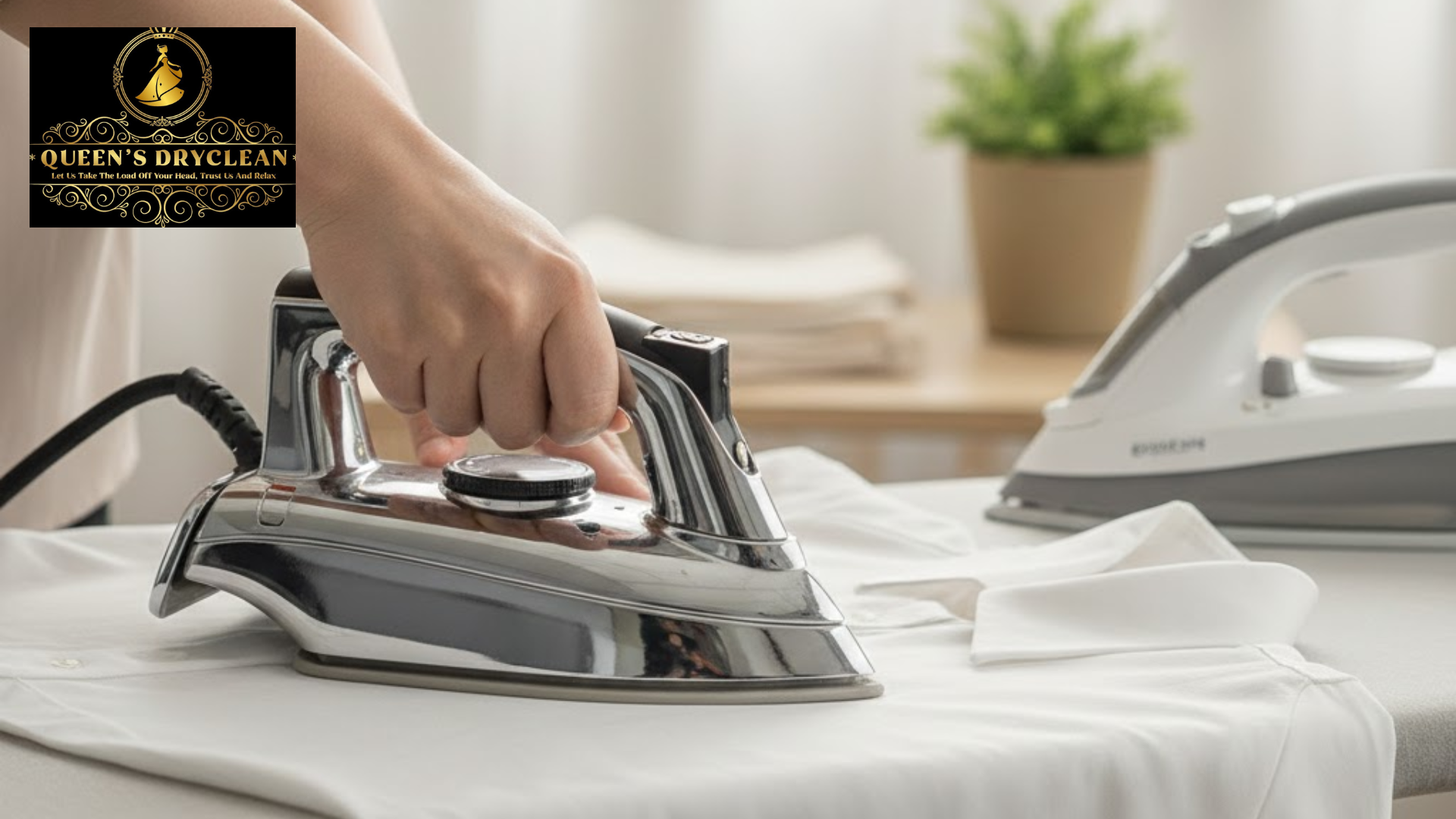
A dry iron employs heat only.
It does not release steam or moisture.
Dry irons are simple and lightweight.
They work well for basic cotton fabrics.
Best used for:
-
- Cotton shirts
-
- Linen clothes
-
- Daily wear garments
What Is a Steam Iron?
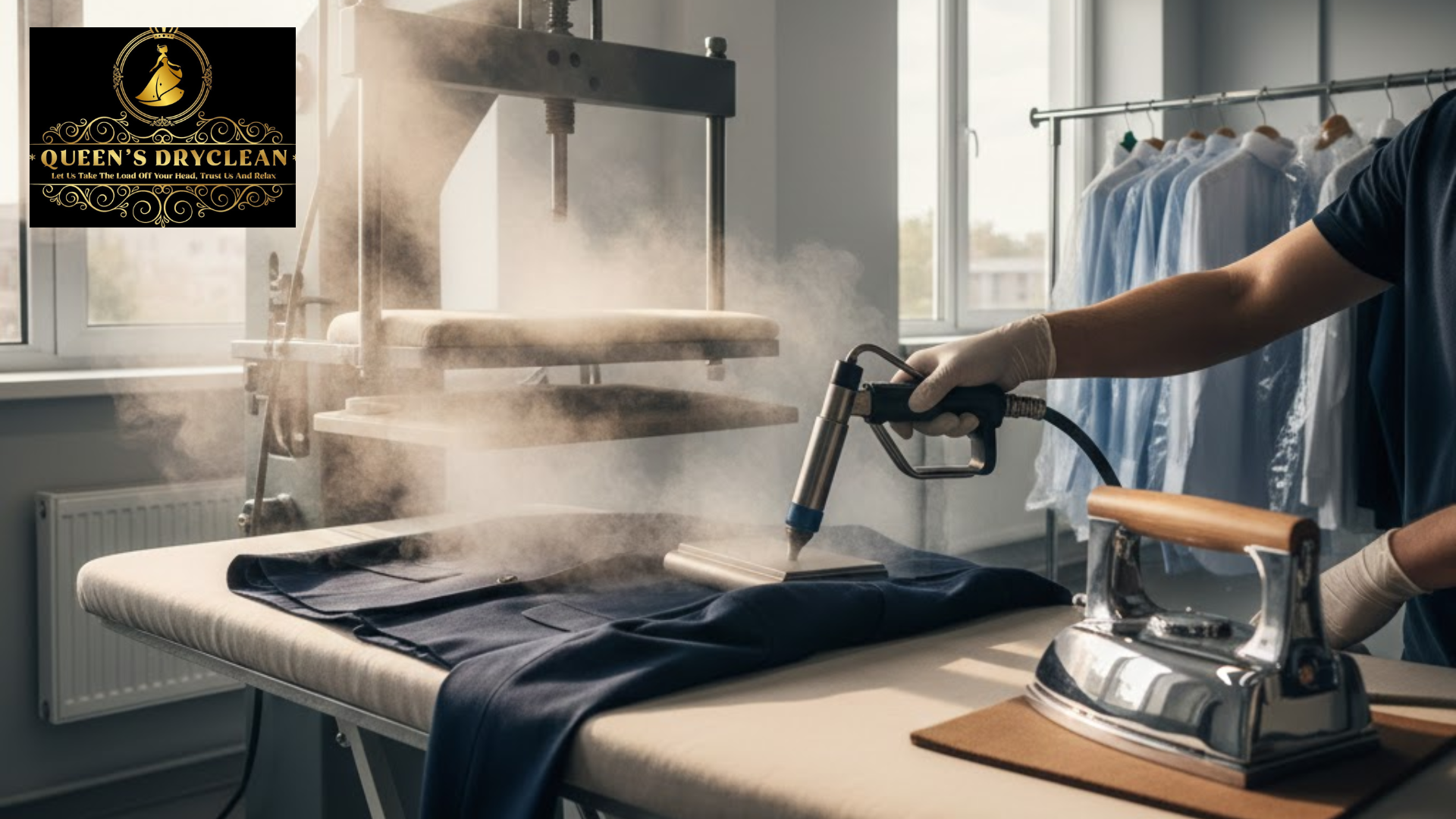
A steam iron releases heat and steam together.
Steam relaxes fabric fibers effortlessly.
Steam ironing removes wrinkles faster.
It works well for thick and structured fabrics.
Best used for:
-
- Formal shirts
-
- Wool garments
-
- Synthetic blends
-
- Heavy fabrics
Why Opting for the Right Iron Matters
Wrong ironing damages clothes permanently.
Heat burns delicate fibers quickly.
Using correct ironing tips protects clothing texture.
Steam Iron vs Dry Iron: Quick Comparison
Dry Iron
Benefits:
-
- Easy application
-
- Affordable
-
- Lightweight
Limitations:
-
- Struggles with deep wrinkles
-
- Needs more effort
- Needs more effort
Steam Iron
Benefits:
-
- Faster wrinkle erasure
-
- Better for thick fabrics
-
- Smoother finishing
Limitations:
-
- Slightly heavier
-
- Needs water maintenance
- Needs water maintenance
Best Way to Iron Clothes (By Fabric Type)
Cotton Clothes
Use medium heat.
Steam works best for deep wrinkles.
Wool Clothes
Use steam ironing only.
Always place a cloth obstacle between iron and fabric.
Silk & Delicate Fabrics
Use low heat only.
Avoid direct steam exposure.
Polyester & Synthetic Fabrics
Use low heat settings.
Steam only if the label permits.
Ironing Tips Most People Disregard
-
- Always check garment labels
-
- Iron clothes slightly moist
-
- Use ironing boards, not beds
-
- Avoid pressing on prints
-
- Wipe iron base regularly
Small ironing habits protect clothes long-term.
When Professional Pressing Is Better
Select professional pressing when:
-
- Clothes are expensive or delicate
-
- Garments have structure or lining
-
- Fabric needs low heat precision
-
- You want ideal finishing
- You want ideal finishing
At Queens Dry Clean , pressing utilises fabric-safe temperature control.
Each garment is manoeuvred individually.
Free pickup and delivery add convenience.
A 48-hour turnaround saves time.
Case Example: Office Shirt Shine Damage
A Mumbai professional from Worli used high heat dry ironing daily.
Shine marks formed on formal shirts.
Professional pressing reinstated finish quality.
Replacement cost was avoided.
The correct ironing method matters.
Conclusion
Steam iron vs dry iron depends on fabric type.
There is no global best option.
Following the right ironing guide protects clothes.
It also improves garment lifespan.
Understanding the best way to iron clothes prevents desecration.
It keeps clothes looking professional longer.
If you want perfect finishing without hazard, professional pressing is the safest option.
Queens Dry Clean proffers expert garment pressing, with free pickup and delivery and 48-hour turnaround.
Call queensdryclean.com to schedule your free pickup today